
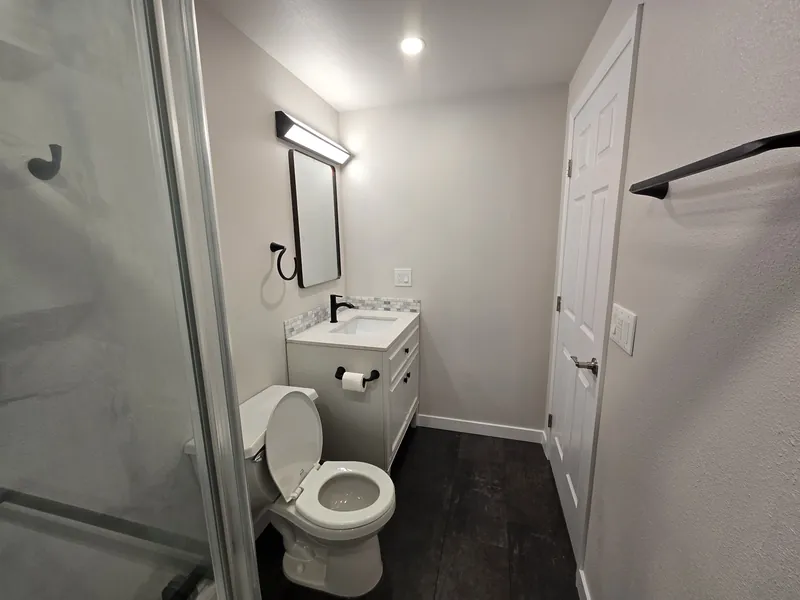
Water damage under a bathroom floor usually shows up as a soft or spongy spot near the toilet or tub, a toilet that rocks, or tile that cracks and lifts. The cause is most often a slow leak from a failed wax ring, a supply line or a worn tub or shower seal. Because moisture can spread past the visible spot, we inspect the area and quote the subfloor rebuild and new tile floor in writing before work starts.
Signs of water damage under the bathroom floor
- A soft or spongy floor at the base of the toilet or in front of the tub. If the floor gives when you shift your weight, the subfloor has likely lost strength.
- A toilet that rocks. The bolts may be loose, or the floor under it may have softened.
- Lifted, loose or cracked tile, or grout that crumbles or stays dark long after a shower.
- Stains on the ceiling below when the bathroom is upstairs.
- A musty smell that stays even with the fan running.
If there is a basement or crawlspace below, check the underside of the floor around the toilet and tub drains with a flashlight. Dark staining, soft wood or fuzzy growth means water has been getting through for a while.
Request an on-site consultation
Tell us about your room, and we'll call to set up a free on-site consultation.
What causes it
- A failed wax ring or toilet flange. The wax ring seals the toilet to the drain. When the toilet rocks, or the flange cracks or corrodes, a little water can escape with each flush and soak into the subfloor out of sight. Our water damage repair page goes into more detail.
- Supply line or shutoff valve leaks. A slow drip behind the toilet can run for months before anyone notices.
- Failed tub or shower seals. Cracked caulk, worn grout, a loose drain gasket or a leaking valve let water work its way under the tub. See shower leak repair for how those get traced.
- Splash-over. Water over the tub edge or past a curtain hits the same spot daily and works into the seams.
- No fan, or a fan that doesn't do the job. Moisture condenses and settles into the floor and walls. Our post on bathroom exhaust fan requirements in Washington explains what to look for.
What a proper repair involves
The repair only lasts if the leak is fixed first. New flooring over a rotted subfloor hides the problem for a while, then the tile cracks or the toilet starts rocking again.
- Find the source so the fix matches the cause.
- Survey the old flooring for asbestos before it comes up. More on that below.
- Remove the toilet and flooring down to the subfloor.
- Cut out the rot back to solid wood, then let the framing dry.
- Check the joists. A soft or cracked joist gets sistered: a new piece of lumber is fastened alongside it to carry the load.
- Put down new subfloor and set a new toilet flange at the right height for the finished floor.
- Finish the room: tile, baseboards and paint, then reset the toilet on a new wax ring.
If the soft area turns out larger, or water has traveled under the tub or along a wall, the scope grows. Our water damage repair page covers that work.
Asbestos survey before old flooring comes up
Bathroom floors can hide older layers of vinyl, tile and adhesive under the one you see. The Puget Sound Clean Air Agency, which covers King, Kitsap, Pierce and Snohomish counties, requires a check for asbestos before renovation. Its guidance for owners and contractors says to first see whether a survey already exists, regardless of the building's age. If none does, an AHERA-certified building inspector does the survey. Flooring material and mastics are on the agency's list of suspect materials.
The agency allows one exception: a homeowner who owns and lives in a single-family house may do their own survey for a remodel. Rentals and condos need a certified inspector.
State rules apply too. Washington L&I says homeowners, building owners and contractors need a good faith inspection by an accredited inspector, such as an AHERA building inspector, before renovation work. A homeowner working on a home not used for business is exempt from L&I's general survey rules but must still share relevant information with contractors. Our price for this job includes a survey by an AHERA inspector.
What about mold?
When wood stays wet under a floor, mold often grows on it. The EPA's mold cleanup guidance says that if the moldy area is less than about 10 square feet, in most cases you can handle the job yourself. If there has been a lot of water damage, or mold covers more than 10 square feet, the EPA points to its guide for larger cleanups. It also says that if you hire a contractor, make sure they have experience cleaning up mold.
The EPA also says to bring in a professional when the damage came from sewage or other contaminated water. Water that seeps past a failed wax ring comes from the toilet drain, so think twice before pulling up wet subfloor yourself. Either way, the first step is to fix the leak and dry everything completely. Our water damage repair page explains how we handle mold during a repair.
Will homeowners insurance cover it?
It depends on how the water got there. The Washington Office of the Insurance Commissioner explains that a sudden, accidental leak such as a burst pipe is usually covered if you report it to your insurer quickly. The OIC also says most homeowners policies don't cover gradual leaks, even if you had no way of knowing they started, because insurers generally treat them as maintenance problems.
A soft floor at the toilet usually comes from a slow leak, which falls on the gradual side. Many policies offer limited mold coverage, and only when the mold results from a covered loss. Read your own policy and ask your agent before you count on a payout.
What the repair costs
Because moisture damage under tile varies from home to home, we inspect the subfloor and framing first and write every repair item clearly into your quote.
| Scope component | What determines the quote |
|---|---|
| Subfloor tear-out & rebuild | Area of damaged plywood and framing access |
| Flooring & toilet reset | New tile or flooring choice and flange height correction |
| Mold remediation (small area) | Photographed and approved on its own line if found |
| Sistering floor joists | Added per joist if moisture softened structural framing |
Asbestos testing and permits are priced separately. The price includes:
- Tile demo, about 40 sq ft
- Repair of water-damaged subfloor and joists
- New toilet flange
- Installing the 12x24 floor tile you pick, including prep
- Reset of your existing toilet on a new wax ring
- New baseboards, about 20 linear feet
- Paint for the bathroom walls and ceiling
- Finish plumbing trim, silicone, caulk and cleanup
- Project management and final cleanup
The add-ons cover what may turn up once the floor is open. If the damage runs past the toilet area, the scope and price change. Before any work begins, you get one visit, a 3D layout and a written scope with a price range. See how our pricing works for how we quote bathroom projects.
Common questions
How much does it cost to fix a soft floor near the toilet?
Every subfloor repair is quoted line by line after we inspect the leak source and floor condition, with transparent unit pricing for any extra joist sistering or small-area mold remediation uncovered once flooring comes up.
Can I put new flooring over a soft spot?
It won't hold. Soft wood keeps flexing, which cracks tile and can break the toilet seal again. If the leak is still active, the rot keeps spreading underneath.
Is a soft bathroom floor an emergency?
Usually not. Most soft floors build over months. Turn off the valve behind the toilet if the supply line drips, stop using a toilet that rocks until it is reset, and plan the repair at a normal pace.
Do I need a permit to replace bathroom subfloor?
Check with your city, since the answer depends on where you live and the scope of work. When a permit is required, the fee and inspections are part of our written quote. Our guide to bathroom remodel permits in Washington covers the basics.
Sources
- Puget Sound Clean Air Agency: About Us (jurisdiction)
- Puget Sound Clean Air Agency: Requirement for asbestos identification in building materials (memo, September 28, 2023)
- Puget Sound Clean Air Agency: Homeowner Renovation
- Puget Sound Clean Air Agency: Contractor Renovation
- Washington State Department of Labor & Industries: Asbestos
- U.S. EPA: Mold Cleanup in Your Home
- Washington State Office of the Insurance Commissioner: Leaks, water damage, and mold